
For over a century, the rhythmic thumping of internal combustion and the hiss of pneumatic lines defined the “sound of progress” in the machine industry. But if you walk onto a modern factory floor today, the soundtrack has changed. It’s quieter, more precise, and driven by a high-pitched hum.
The shift toward electric motors isn’t just a trend or a nod to environmentalism; it is a fundamental re engineering of how we build things. From massive industrial lathes to delicate robotic assembly arms, the “heart” of the machine is being replaced.
Here is why the machine industry isn’t just wanting electric motors—it needs them to survive the next industrial era.
Precision That Piston Power Can’t Match
In the world of modern electric motors manufacturer, “close enough” is no longer an option. Whether you are 3D printing a titanium aerospace part or machining a smartphone casing, you are working with tolerances measured in microns.
Electric motors—specifically servo and stepper motors—offer a level of control that hydraulic or internal combustion systems simply cannot replicate. Through digital controllers, an electric motor can be told to rotate exactly 1.8 degrees, stop instantly, and repeat that action a million times without drifting.
∙ Dynamic Response: Electric motors can change speed and direction almost instantaneously.
∙ Torque Control: They provide consistent torque across a wide range of speeds, allowing for smoother operation even under heavy loads.
The Efficiency Equation (And the Bottom Line)
When we talk about efficiency in the machine industry, we are talking about the ratio of energy input to useful work output.
Internal combustion engines are notoriously wasteful, often losing 60-70% of their energy as heat. Hydraulic systems suffer from “parasitic losses” due to fluid friction and pump inefficiencies. Electric motors, by contrast, frequently achieve efficiency ratings of over 90%.
Why this matters for the factory owner:
∙ Lower Operating Costs: Less electricity is wasted as heat, directly lowering utility bills.
∙ Reduced Cooling Needs: Because electric motors run cooler, factories don’t need to spend as much on massive HVAC systems to keep the floor at a workable temperature.
∙ Regenerative Braking: Modern industrial drives can actually capture energy during deceleration and feed it back into the grid.
Reliability: The End of the “Leaky Pipe” Era
If you’ve ever worked around hydraulic machinery, you know the drill: seals fail, hoses burst, and fluid spills. Not only is this a safety hazard, but it also means unplanned downtime.
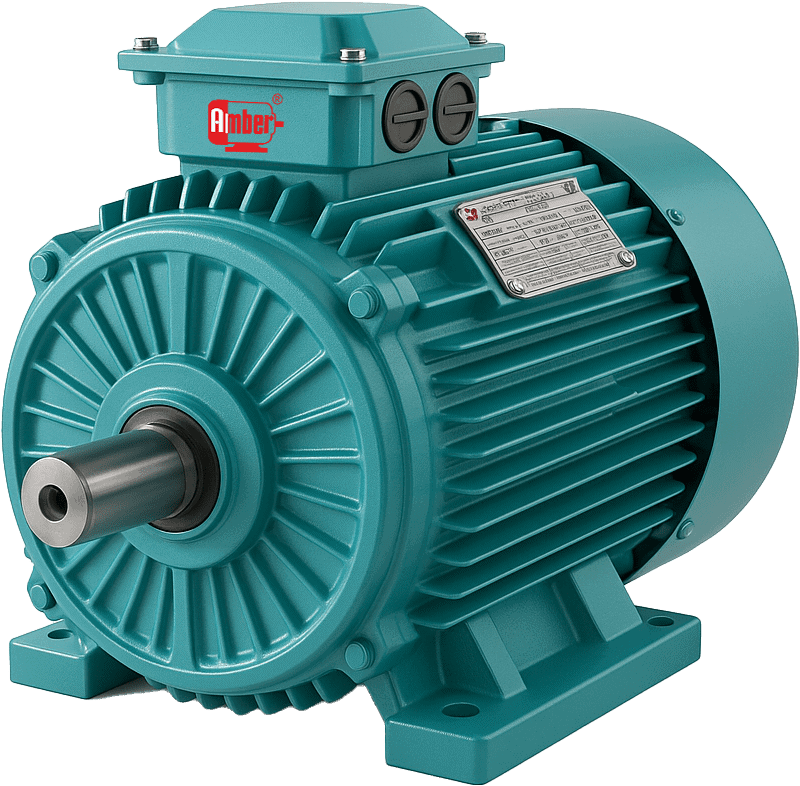
Electric motors are remarkably simple machines. In their most basic form (the induction motor), there are very few moving parts that actually touch. No valves to clog, no oil to filter, and no spark plugs to replace.
Predictive Maintenance: Electric motors are “born digital.” It is incredibly easy to attach sensors that monitor vibration and heat, allowing software to predict a failure weeks before it happens. ∙
Longevity: A well-maintained electric motor can run for decades. In an industry where “uptime” is the only metric that matters, the reliability of electric power is a massive competitive advantage.
Compact Power: Doing More with Less Space
Floor space is one of the most expensive assets in any machine shop or factory. Older mechanical power transmission systems required massive footprints—think of the sprawling belts, pulleys, and gearboxes of the early 20th century.
Electric motors offer a much higher power-to-weight ratio. You can tuck a high-output electric motor into the joint of a robotic arm or inside the spindle of a CNC mill. This allows for:
- Modular Machine Design: Machines can be smaller and more mobile.
- Integrated Electronics: By shrinking the motor, engineers can fit more sensors and “intelligence” into the same footprint.
- The “Green” Mandate and Regulatory Pressure
We can’t discuss the machine industry without acknowledging the changing regulatory landscape. Governments worldwide are tightening the screws on carbon emissions and energy waste.
The machine industry is under pressure to de-carbonize. Electric motors are the clearest path to meeting these goals. Whenever a factory changes to electrical power, it is not only reducing pollution locally, but also making its premises “future, proof”. With the power grid moving to renewable sources such as wind and solar, each piece of equipment in that factory will be environmentally friendly by nature without having to undergo any physical update.
The Digital Twin and Industry 4.0
We are currently in the midst of Industry 4.0—the integration of big data, AI, and the Internet of Things (IoT) into manufacturing.
Electric motors are the perfect “citizens” for a smart factory. Because they are controlled by electrical signals, they generate data constantly. A smart motor can tell a central computer:
∙ “I am using 10% more current than I did yesterday; my bearings might be wearing out.” ∙ “I have completed 5,000 cycles today with zero positioning errors.”
This level of communication is nearly impossible with a purely mechanical or hydraulic system. The electric motor acts as both the muscle and the sensor, feeding the data loop that allows AI to optimize the entire production line.
Safety and the Human Element
Finally, there is the human factor. Modern machine shops strive to be cleaner, quieter, and safer.
∙ Noise Reduction: High-decibel environments lead to worker fatigue and long-term hearing loss. Electric motors operate at a fraction of the noise level of combustion engines.
∙ No Fumes: Eliminating exhaust in a confined factory space improves air quality and removes the need for complex ventilation systems.
∙ Instant E-Stops: Electric systems can be programmed with “functional safety” parameters, where the motor cuts power and applies a brake in milliseconds if a light curtain is tripped or an emergency button is pressed.
The Verdict: A Necessary Evolution
The machine industry isn’t switching to electric motors because it’s a “nice to have.” They are switching because the alternative is obsolescence.
In a world that demands hyper-precision, 24/7 uptime, and carbon neutrality, the electric motor is the only tool for the job. It is the bridge between the heavy-iron heritage of the past and the data-driven, automated brilliance of the future.
The “Old Guard” of mechanics might miss the smell of diesel and the roar of the engine, but the new leaders of industry are too busy looking at their increased margins and flawless production runs to look back.
Conclusion
Choosing the right electric motor is rarely about finding a component; it’s about choosing the heartbeat of your industrial body. At Amber Engineering Enterprise, we don’t just manufacture motors—we engineer the reliability your production line depends on.
We understand that in the machine industry, a minute of downtime is a minute of lost opportunity. That is why our approach to manufacturing combines the heritage of robust engineering with the intelligence of modern digital integration. Whether it’s through our high-torque servo systems or our energy-efficient induction motors, our goal remains the same: to provide a power source that is so reliable, you eventually forget it’s even there.