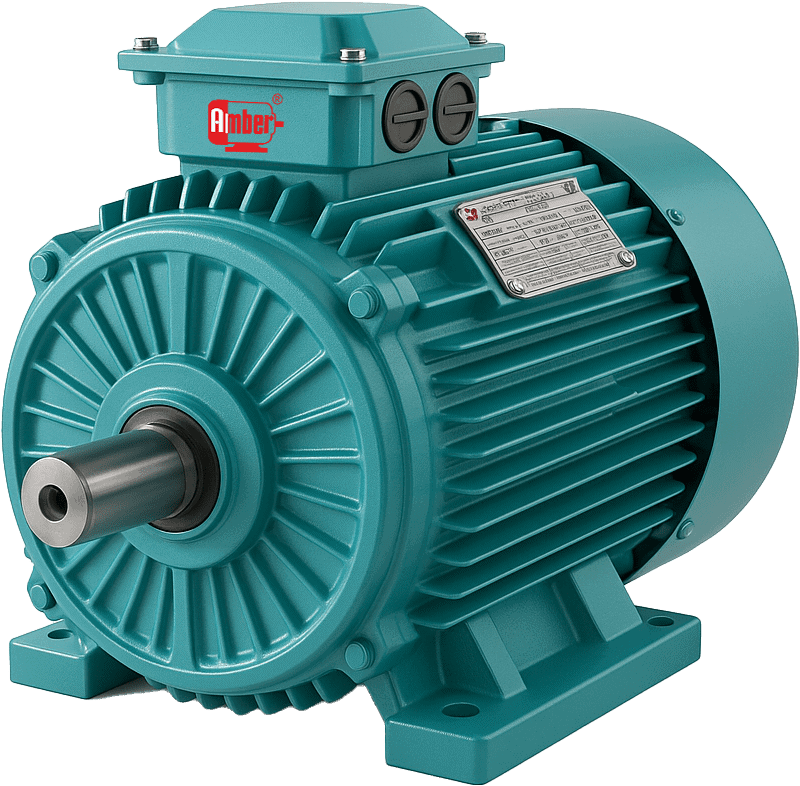

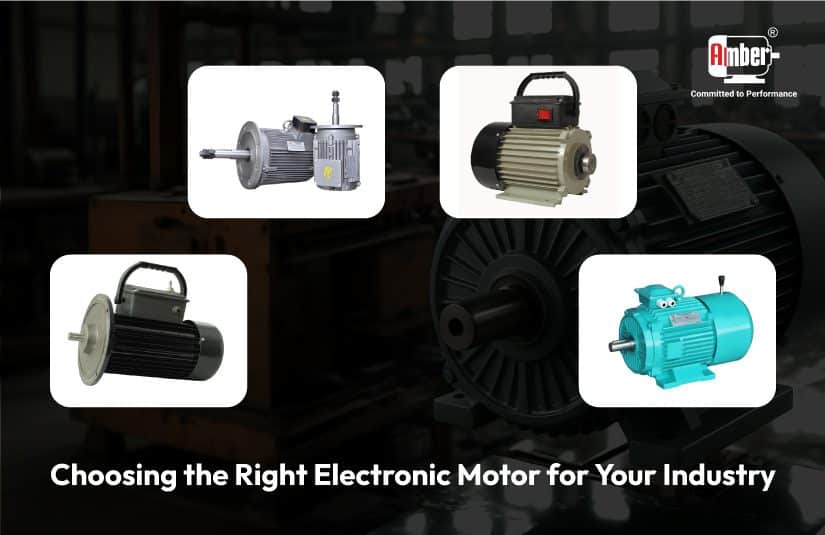
Selecting the right electronic motor is not just a technical decision—it’s a business one. The motor you choose directly impacts production efficiency, energy consumption, maintenance costs, and even equipment lifespan. However, many industries continue to rely on “standard” motor choices without taking into account how performance is actually impacted by operating conditions, load patterns, and future scalability.
This guide breaks down how industries can make smarter, long-term motor choices—without over engineering or overspending.
Understand How Your Industry Actually Uses the Motor
It’s crucial to comprehend how the motor will be used in actual operating conditions before looking at specifications. Depending on whether they operate continuously, intermittently, or under different loads, motors exhibit very different behaviors.
A motor used in a manufacturing conveyor, for instance, runs steadily, but a motor used in material handling equipment might experience frequent starts, stops, and load fluctuations. Agricultural and processing industries often expose motors to dust, moisture, or temperature variations, which demand more robust designs.
Choosing a motor without considering these practical conditions often leads to overheating, premature wear, or unnecessary energy losses.
1. Defining the Load:
The First Commandment Before looking at a catalog, you must understand what you are trying to move. Motors don’t exist in a vacuum; they exist to overcome resistance.
Constant vs. Variable Torque
Constant Torque: Applications like conveyors, displacement pumps, and reciprocating compressors require the same amount of “twist” regardless of speed.
Variable Torque: For centrifugal fans and pumps, the torque required increases with the square of the speed. These are the “low-hanging fruit” for energy savings when paired with a Variable Frequency Drive (VFD).Starting Torque (Locked Rotor Torque)One of the most common mistakes is choosing a motor that can run the load but cannot start it. A conveyor loaded with heavy ore requires significantly more torque to get moving from a standstill than it does to maintain speed. If your starting torque is insufficient, the motor will “stall,” draw excessive current, and likely trip the breaker or burn out the windings.
2. Navigating the Standards:
NEMA vs. IEC Depending on where you are in the world or where your machinery was manufactured, you will encounter two primary standards.
Feature NEMA (National Electrical Manufacturers Assoc.)IEC (International Electro technical Commission)Primary Region North America Global / Europe Measurement Imperial (Inches/HP)Metric (Millimeters/kW)Philosophy Robust, “over-built,” higher service factors Compact, application-specific, cost-efficient Enclosures Descriptive (e.g., TEFC, ODP)IP Ratings (e.g., IP55, IP66)Pro Tip: If you are replacing an old NEMA motor with a modern IEC equivalent, pay close attention to the frame size. A NEMA 145T and an IEC 90S might have similar power ratings, but the shaft heights and mounting bolt patterns will differ, requiring a transition base.
3. The Efficiency Math: IE1 to IE4
Energy accounts for over 95% of the total lifetime cost of an industrial motor. The initial purchase price is a rounding error by comparison.IE1 (Standard Efficiency): Generally phased out or illegal for new installations in many regions.IE2 (High Efficiency): The baseline for many older systems.IE3 (Premium Efficiency): The current regulatory standard for most industrial applications.IE4 (Super Premium Efficiency): Often utilizing permanent magnet technology or synchronous reluctance.
The ROI Calculation: If a motor runs 24/7, upgrading from an IE2 to an IE4 motor often pays for itself in less than 18 months through electricity savings alone.
4. Environmental Protection (IP Ratings)
An industrial motor is only as good as its enclosure. The Ingress Protection (IP) rating tells you how well the motor is sealed against solids and liquids.IP55: Protected against dust and low-pressure water jets. Standard for most indoor factory environments.IP66: Dust-tight and protected against heavy seas or powerful jets. Essential for “washdown” areas in food processing.
TEFC (Totally Enclosed Fan Cooled): The workhorse of the industry. It keeps internal air separate from external contaminants while using an external fan to blow air over the cooling fins.
5. Critical Technical Specifications
To communicate effectively with suppliers, you need these four data points:
I. Duty Cycle (S1 through S8)Does the motor run 24/7 at a constant load (S1 Continuous Duty), or does it start and stop every few minutes (S3 Intermittent Duty)? Motors designed for continuous duty may overheat if subjected to frequent starts because the “inrush” current generates a massive burst of heat that the cooling system hasn’t had time to dissipate.
II. Insulation Class Most modern motors use Class F insulation, rated for an operating temperature of 155°C. However, savvy engineers often specify “Class F insulation with a Class B rise.” This means the insulation can handle 155°C, but the motor is designed to run no hotter than 130°C, giving you a “safety buffer” that significantly extends the life of the windings.
III. Altitude and Ambient Temperature Standard motors are rated for use up to 3,300 feet (1,000 meters) and an ambient temperature of 40°C (104°F). If your facility is in the mountains or a high-heat foundry, you must derate the motor. A 100 HP motor may only safely produce 85 HP in those circumstances due to the motor’s inability to cool itself due to thinner air and increased heat.
IV. Service Factor (SF)Think of the Service Factor as an insurance policy. A motor with a 1.15 SF can handle a 15% overload for short periods without immediate damage. Although a system should not be designed to operate continuously in the SF range, it offers an essential buffer for unforeseen load spikes.
6. The “Sizing Trap”: Avoiding the Oversized Motor
For decades, the “safety margin” approach led engineers to buy motors 25% larger than necessary. This is a mistake for two reasons:
Efficiency Loss: Induction motors are most efficient when loaded between 75% and 100%. A 100 HP motor running a 40 HP load operates at a terrible power factor and lower efficiency.
Increased Capital Cost: You are paying for copper and steel you don’t need.
The Solution: Use a power analyzer to measure your actual load requirements during a trial run, then select the motor that puts your normal operating point at roughly 80% of the motor’s nameplate capacity.
7. Maintenance and Longevity
Once you’ve chosen the right motor, its life span is dictated by three things: Heat, Vibration, and Lubrication.- Heat: Every 10°C increase above the rated temperature halves the life of the insulation.
- Vibration: Often caused by shaft misalignment. Use laser alignment tools; “eyeballing it” is the fastest way to kill bearings.
- Lubrication: More motors are killed by over-greasing than under-greasing. Excess grease can get forced into the windings, causing insulation failure. Follow the manufacturer’s specific grams-per-hour recommendation.
Conclusion
Choosing the right motor is an exercise in balancing mechanical necessity with long-term operational costs. By focusing on the specific torque needs of your load, adhering to modern efficiency standards (IE3/IE4), and ensuring your enclosure matches your environment, you can turn a simple hardware purchase into a long-term asset for your facility.
Amber Engineering a motor manufacturing company is a trusted name in electronic motor manufacturing, delivering reliable, high-performance solutions built for real industrial demands. Amber Engineering creates motors that function reliably even under difficult working circumstances by putting a significant emphasis on precision engineering, energy efficiency, and long term durability. Modern production techniques and quality tested parts are used in the manufacturing of each motor, guaranteeing smooth performance, low power consumption, and less maintenance. Amber Engineering Enterprise is dedicated to assisting industries in increasing production through dependable and effective motor technology, from typical industrial applications to customized motor solutions.