
In the high-stakes world of industrial manufacturing, precision isn’t just a goal—it’s a requirement. Whether you’re operating a massive CNC line or refining a tool on a manual bench grinder, the stability and reliability of your equipment start with one critical, often overlooked component: the Mounting Motors.
While we often focus on horsepower and RPM, the way a motor is anchored to its environment—its “mounting”—is what determines whether that power is harnessed for precision or lost to destructive vibration. In this guide, we’ll break down the key features and technical specifications of industrial mounting motors to help you make an informed choice for your workshop.
The Foundation of Performance: Why Mounting Matters
At its core, a mounting motor is designed to do two things: transfer rotational energy and stay exactly where it’s put. In industrial settings, even a millimeter of “play” or a slight misalignment can lead to catastrophic failure.
When a motor isn’t mounted correctly, the energy that should be turning your shaft is instead converted into Noise, Vibration, and Harshness (NVH). For delicate tasks like those performed on manual bench grinders, this vibration can ruin a finish or, worse, cause a grinding wheel to shatter.
Key Features of Industrial Mounting Motors
Industrial-grade motors aren’t just “stronger” versions of household motors; they are engineered for a different set of survival conditions.
1. Standardization: NEMA vs. IEC
The first thing you’ll notice is a “Frame Size” on the nameplate. This isn’t just a random number; it follows strict international standards:
- NEMA (National Electrical Manufacturers Association): Common in North America, these use imperial measurements (inches).
- IEC (International Electrotechnical Commission): Prevalent globally, these use metric measurements (millimeters).
These standards ensure that if your Mounting Motors fail, you can swap them out with any other brand’s motor of the same frame size without having to redrill your equipment.
2. Specialized Enclosures (TEFC)
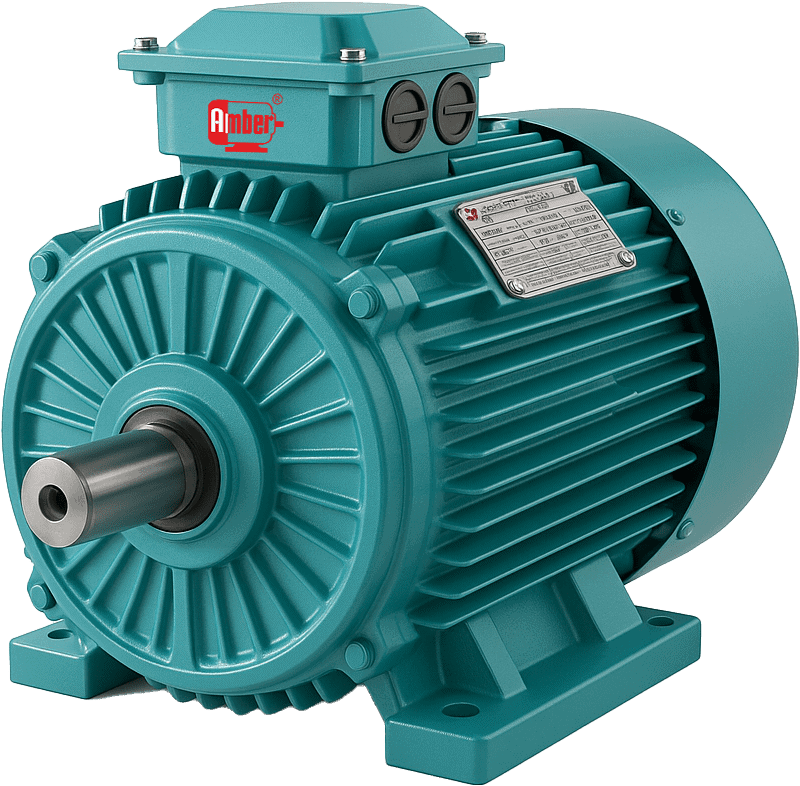
Most industrial mounting motors utilize a Totally Enclosed Fan Cooled (TEFC) design. Unlike open motors that pull in workshop dust and metal shavings, TEFC motors are sealed. An external fan blows air over the motor’s exterior ribs to dissipate heat. This is non-negotiable in environments where conductive dust is present.
3. High Starting Torque
Getting a heavy load moving from a dead stop requires a massive burst of energy. Industrial motors are categorized by “Design Classes” (like NEMA Design B or C) that define their starting torque. For applications like conveyor belts or heavy grinders, you need a motor that won’t just hum and stall—it needs to “kick” into gear.
Technical Specifications You Need to Know
When comparing Mounting Motors, the “silver plate” on the side (the nameplate) is your roadmap. Here is how to decode the most vital specs:
|
Specification |
Technical Significance |
Why It Matters for You |
|
Service Factor |
The percentage of overload the motor can handle. |
A 1.15 SF means the motor can handle 15% more than its rated HP for short bursts. |
|
Insulation Class |
Rated by letters (B, F, H). |
Class F is the industrial standard, allowing the motor to run at higher temperatures without the internal wiring melting. |
|
Duty Cycle |
Usually “Continuous” (S1). |
Means the motor can run 24/7 without a “cool down” period. |
|
Ingress Protection |
e.g., IP55. |
Tells you how well the motor resists dust and water. IP55 is standard for most industrial “wash-down” environments. |
Understanding Mounting Configurations
How you attach the motor to your machine depends on your space and torque requirements. There are three primary ways to secure industrial Mounting Motors:
1. Foot Mounting (B3 / Rigid Base)
The most common setup. The motor has “feet” with bolt holes that sit on a flat plate. This is the bedrock of stability for large machinery and heavy-duty manual bench grinders.
2. Flange Mounting (B5 / D-Flange)
The motor has a large circular plate on the front. It bolts directly to the machine’s housing. This ensures perfect shaft alignment, which is critical for pumps and gearboxes.
3. Face Mounting (B14 / C-Face)
Similar to a flange but smaller and with threaded holes. This is ideal for compact spaces where the motor needs to “mate” directly with another component, like a hydraulic pump.
Pro-Tips for Longevity
Even the most rugged industrial motor needs a proper environment to thrive. If you are integrating new Mounting Motors into your shop, keep these three factors in mind:
- Vibration Isolation: In precision workshops, consider using rubber-to-metal “anti-vibration” mounts between the motor and the floor. This “decouples” the motor’s energy from the building, protecting other sensitive equipment.
- Alignment is King: 50% of bearing failures are caused by misalignment. Use a laser alignment tool or a dial indicator to ensure the motor shaft and the driven shaft are perfectly centered.
- Heat Management: While TEFC motors are great at cooling themselves, they can’t do it if they are shoved into a corner with no airflow. Give your motor “breathing room” to ensure the fan can actually do its job.
The Human Element: Powering Your Craft
At the end of the day, an industrial motor is just a lump of copper and steel until you flip the switch. For the craftsman, the motor provides the steady, unyielding power that allows them to focus on the work in front of them. When you know your Mounting Motors are spec’d correctly, you stop worrying about the machine and start focusing on the masterpiece.
Conclusion
At Amber Engineering Enterprise, we don’t just sell power; we sell peace of mind. Our range of industrial Stud Mounting Motors is engineered to exceed NEMA and IEC standards, providing the rock-solid stability your workshop demands.
Whether you’re looking for a TEFC motor for a dusty fabrication floor or a high-torque solution for your manual bench grinders, Amber Engineering delivers the technical specifications you need with the durability you deserve. Don’t settle for “good enough”—power your business with the precision of Amber Engineering.