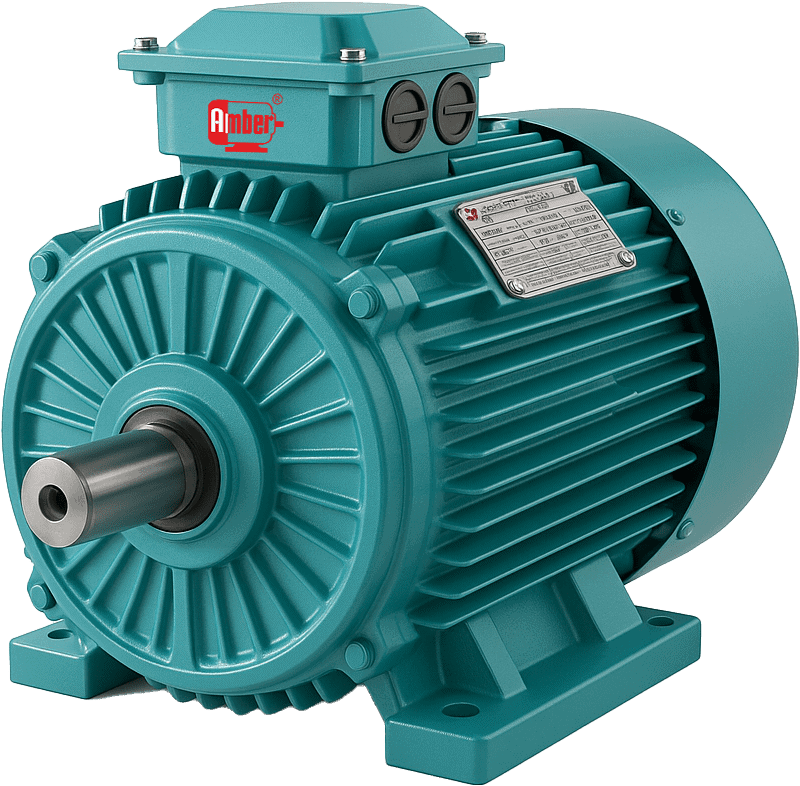

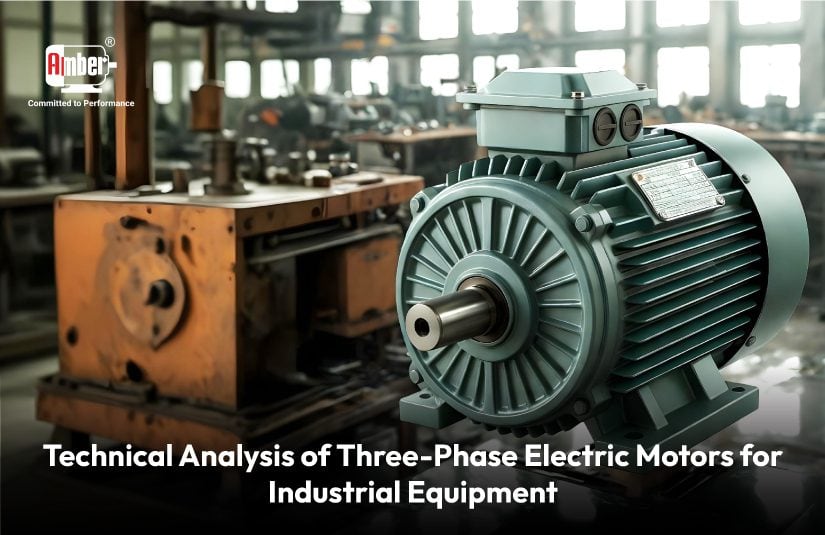
Walk into any manufacturing plant, textile mill, or water treatment facility, and you’ll hear a constant, rhythmic hum. That sound is the heartbeat of global industry. It isn’t coming from high-tech computers or flashy robots; it’s coming from the three-phase electric motor.
Despite being invented over a century ago, this “workhorse” remains the backbone of the industrial sector. But why, in an age of AI and wireless everything, do we still rely so heavily on a piece of hardware designed in the late 1800s?
In this deep dive, we’ll explore the significance of the three-phase motor for industrial applications, why it’s preferred over its single-phase cousins, and how it continues to drive our modern economy.
There are three type of Three Phase Electric Motors:-
- Three Phase IE2 Electric Motor Manufacturer
- Three Phase EFF2 Electric Motor Manufacturer
- THREE PHASE AAL Series Aluminum Motor Manufacturer
1. The Anatomy of Efficiency: What Makes It Tick?
At its core, a three-phase electric motor is a masterpiece of simplicity. Unlike other motors that require complex commutators or brushes (which wear out and spark), the electric motor operates on the principle of electromagnetic induction.
The Core Components
The Stator: The stationary outer part, which receives three-phase AC power to create a rotating magnetic field.
The Rotor: The internal part that rotates. In most industrial cases, this is a “squirrel cage” rotor—a rugged, simple design that is nearly indestructible.
How it Works (The Simple Version)
When you feed three-phase power into the stator, it creates a magnetic field that literally “rotates” around the rotor. This moving field induces a current in the rotor, creating its own magnetic field. The two fields interact, and the rotor begins to chase the stator’s field, creating mechanical motion.
Because there is no physical electrical connection between the stationary and rotating parts, there is significantly less friction and wear.
2. Why “Three-Phase” is the Industrial Gold Standard
You might wonder why we don’t just use the single-phase power found in our homes. The answer lies in consistency and torque.
Constant Power Delivery
Single-phase power pulses. It’s like a cyclist pedaling with only one leg—there’s a momentary “dead spot” in every rotation. In a home blender, you don’t notice it. In a 500-horsepower industrial pump, that vibration would destroy the machine.
Three-phase power, however, delivers three overlapping waves of electricity. As one wave peaks, the others are picking up the slack. This ensures a constant, smooth flow of power to the motor.
Self-Starting Capability
Single-phase motors are socially awkward—they need a “push” to get started (usually via a capacitor). Three-phase motors are self-starters. The rotating magnetic field is naturally produced by the three phases, allowing the motor to start under heavy loads without extra components.
3. The Pillars of Industrial Importance
The three-phase motor for industrial use isn’t just popular; it’s essential. Here is why it dominates the sector:
1. Unmatched Durability
In a factory, downtime is the enemy. A broken motor can cost thousands of dollars per hour in lost production. Because electric motors lack brushes and commutators, they can run for decades with minimal maintenance. They thrive in “dirty” environments—dust, heat, and vibration—where more delicate motors would fail.
2. High Power-to-Weight Ratio
Industrial spaces are often cramped. Engineers need the most “bang for their buck.” A three-phase motor can produce significantly more mechanical power than a single-phase motor of the same physical size. This allows for more compact machinery designs.
3. Superior Efficiency
In the industrial world, electricity is a massive overhead cost. Three-phase electric motors are inherently more efficient at converting electrical energy into mechanical work. When scaled across a factory with 200 motors, a 5% increase in efficiency can save millions in annual energy costs.
4. Key Applications: Where Do We See Them?
If it moves in a factory, a three-phase motor is likely behind it.
Pumps and Compressors: Essential for the oil and gas industry and water management systems.
Conveyor Systems: From Amazon warehouses to airport luggage belts, these motors provide the constant torque needed to move heavy loads.
Machine Tools: Lathes, mills, and CNC machines require the precise, vibration-free rotation that only three-phase power provides.
HVAC Systems: Large-scale commercial cooling relies on these motors to drive massive fans and chillers.
5. The Evolution: VFDs and the Smart Factory
The biggest “upgrade” to the three-phase motor in recent years isn’t the motor itself, but how we control it. Enter the Variable Frequency Drive (VFD).
Historically, electric motors ran at a constant speed. If you needed to slow down a pump, you used a valve to throttle it (which is incredibly wasteful). Today, VFDs allow us to control the frequency of the power going into the motor, adjusting the speed with pinpoint accuracy.
This has transformed the three-phase motor for industrial use into a “smart” component. We can now:
Reduce energy consumption by running motors only as fast as needed.
Reduce mechanical stress through “soft starts.”
Integrate motors into IoT (Internet of Things) networks to predict when they might need maintenance before they actually fail.
6. Economic and Environmental Impact
Beyond the factory floor, these motors play a massive role in global sustainability. Since electric motors consume about 45% of the world’s total electricity, even small improvements in electric motor design (such as moving from IE2 to IE4 efficiency classes) have a massive impact on reducing carbon footprints.
By choosing high-efficiency three-phase motors, industrial leaders are not just saving money; they are meeting the increasingly strict environmental regulations required in the 21st century.
Conclusion,
The three-phase motor for industrial applications is a rare example of a technology that was “born right.” While we have refined the materials—using better copper, higher-grade steel, and smarter controllers—the fundamental physics remains the same because it is simply the most efficient way to turn electricity into motion.
As we move toward Industry 4.0, these motors will continue to evolve, becoming more connected and even more efficient. But one thing is certain: as long as we need to build, move, or manufacture things, the three-phase Electric motor will be there, humming away in the background. At Amber Engineering Enterprise, we don’t just see copper coils and steel frames; we see the pulse of your production line. We customize and understand that when you invest in a three-phase motor, you’re actually investing in uptime, safety, and the peace of mind that comes from knowing your operations are built on a solid foundation. As industry continues to move toward a more automated and energy-conscious future, we remain committed to perfecting the “workhorse” that makes it all possible. After all, the world doesn’t just need more power—it needs the right kind of power to keep moving forward.